




Poul Kjærholm
PK-101
products.product.pickup_availability.unavailable
Structural and Minimalist
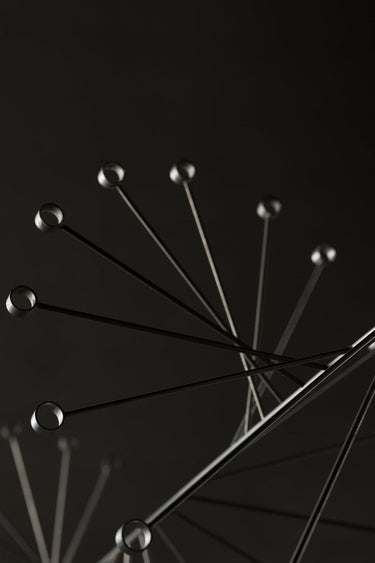
Utilizing industrial techniques and materials, Kjærholm brought forth a new, streamlined aesthetic. The PK-101, created in 1956, is a perfect embodiment of this approach.
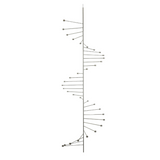
Characterized by a structural and minimalist design, the PK-101 reflects the essence of Poul Kjærholm’s architectural work. It showcases 33 horizontally placed arms, aligned in a staggered vertical sequence, with each arm holding a single candle.
This linear and geometric composition is a testament to Kjærholm’s commitment to clean lines and functional simplicity.
Product information
PK-101
Material
Stainless steel
Dimensions
W34.6cm H114cm
Pc 1.
Where do you deliver?
We ship worldwide with:
GLS or PostNord for Danish orders
FedEx or UPS for international orders
How long will my deliver take?
After the package has left our warehouse normal delivery time is 1-2 business days for orders to be shipped in Denmark, 3-5 business days for orders to be shipped in EU, 3-5 business days for orders to be shipped in other countries. You’ll get an email notification from us when your order is ready to be shipped.
How much does it cost?
The shipping costs depend on the shipping address and they will be shown before you finalise your purchase.
Are there any extra costs (taxes, duties, customs etc.) I have to pay in addition to the prices shown on your web store?
For shipments outside of the European Union (EU):
After choosing the country of delivery on the cart page, you’ll see your final prices.
For deliveries outside the EU, Danish VAT won’t be counted. Packages are shipped as Delivery Duty Unpaid (DDU) which means the recipient is responsible for payment of all applicable duties, taxes and other fees. Please contact your local customs office for more information.
Please visit our Terms and conditions page for more information.
Can I cancel or change my order?
If you regret your purchase or you want to add some more products to your order you can write us at service@architectmade.com. Please indicate your name, the products you wish to return as well as the order number and date. Our Customer Service will give you further instructions on how to proceed. Please note, that if your order has already been shipped, you need to return the package in accordance with our return policies.
Please visit our Terms and conditions page for more information.
Can I track my order?
Please send an e-mail to service@architectmade.com to find out where your delivery is and when to expect it.
What if my package didn’t arrive?
Home deliveries are made during business hours from Monday to Friday, excluding public holidays. For undeliverable packages, UPS will leave a note and you can pick up your delivery from a UPS Access Point near you. UPS Access point will store your package for 10 days.
If there’s no Access Point near you or UPS was unable to leave you a note, please contact UPS to arrange a new delivery time.
If your package cannot be delivered or it is not picked up from a pick-up point, it will be returned to us. As we can’t re-dispatch orders that have been returned to us as undeliverable or uncollected, we will consider your order cancelled (even in the absence of your formal cancellation) and we will issue you a full refund, including the delivery costs.
Please send an e-mail to service@architectmade.com for more information.
Can I return or exchange a product that I ordered?
For all products ordered from our web store, you have a right of return and refund during a period of fourteen (14) days from the day you receive your order. You are responsible for return shipping costs. Send an e-mail to service@architectmade.com to arrange the return/exchange. Please indicate your name, the products you wish to return as well as the order number and date.
Please visit our Terms and conditions page for more information
What if the products received are damaged or incorrect?
We’re sorry for the inconvenience. Please contact our Customer Service and they will assist you. Indicate your name, order number and products concerned. Attach an image of damaged products if possible. You can find the order number in the order confirmation and shipping confirmation emails we’ve sent you.
Pure form
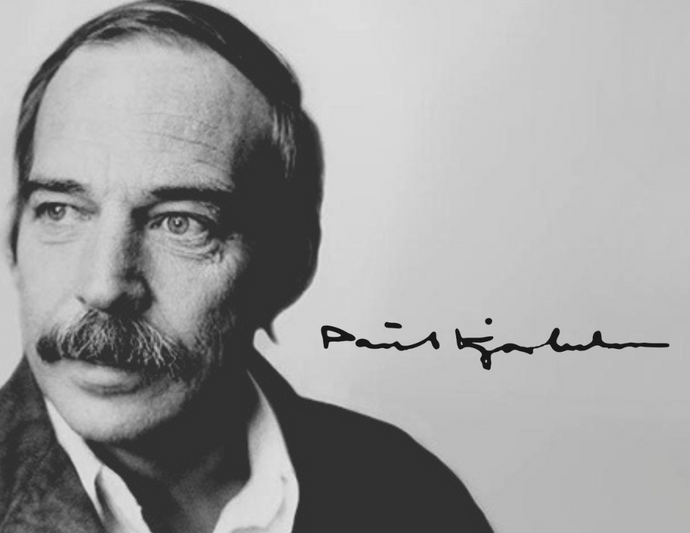
Poul Kjærholm
A purist, Poul Kjærholm is known for his modern, functionalist furniture, praised for its understated elegance and clean lines. His uncompromising goal of “making form a part of function” helps peel away the superfluous, creating a refined, timeless and utilitarian object.
Kjærholm, born in 1929, studied at the School of Arts and Crafts in Copenhagen where he would later teach from 1952-56. In 1976 he was appointed Professor of Furniture Design at Copenhagen’s Royal Academy. His rigour and attention to detail have won him a place in the permanent collection of the Museum of Modern Art in New York, the V&A Museum in London and other museum collections in Denmark, Norway, Sweden and Germany.
Throughout his tenure, he insisted on structural clarity and technical quality, emphasising its application in the design of everyday objects by celebrating the assembly details and showing the components of every object. His furniture quickly benchmarked Danish design, as did his objects, leading the way in the development of the austere, yet functional style that would help define this era.
Kjærholm’s philosophy embraced sustainability as a timeless expression, stressing the importance of using materials that age beautifully. While demanding precision in both the creation and manufacturing of his designs, he was known to never let a design out the door that he did not deem “perfect”.